The deposit argument, settled before it starts
Smart Turnover records what a unit looked like when somebody moved in and what it looked like when they moved out — photographs, notes and signatures, room by room. When the deposit comes up, what changed is a matter of record rather than a matter of memory.
Two turnovers a year, free, no card. Android, iPhone and any browser.
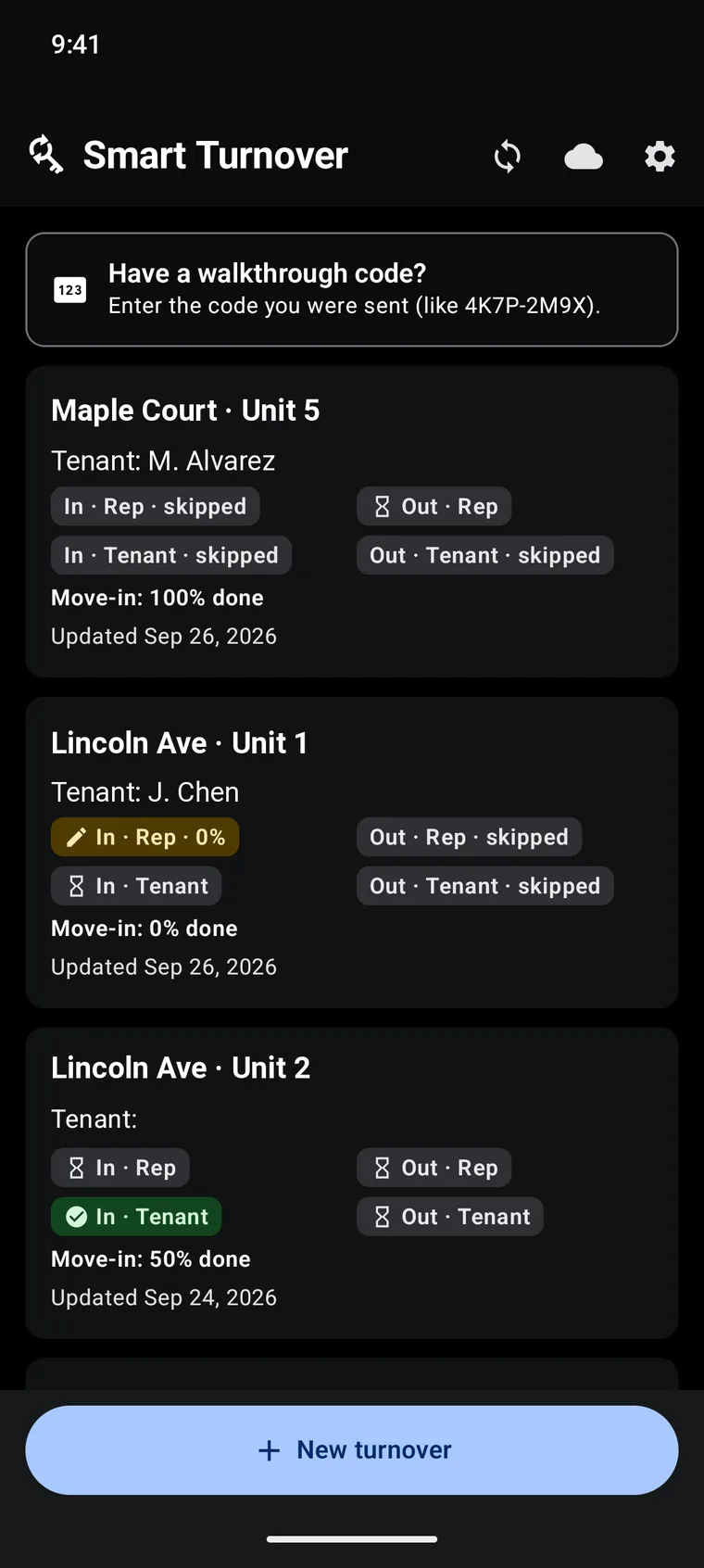
Three steps, then it runs itself
Set the property up once
Rooms and what gets checked in each of them. Save it as a template and every future turnover at that address starts from it — or reuse one template across a whole portfolio.
Walk through and answer
Rate each item, photograph what matters, add a note where it needs one. No signal in the basement is fine; it records on the phone and uploads when there is.
The comparison writes itself
Move-in against move-out, item by item, marked pre-existing or new. Deductions priced from your own repair list, and a statement the tenant can read and respond to.
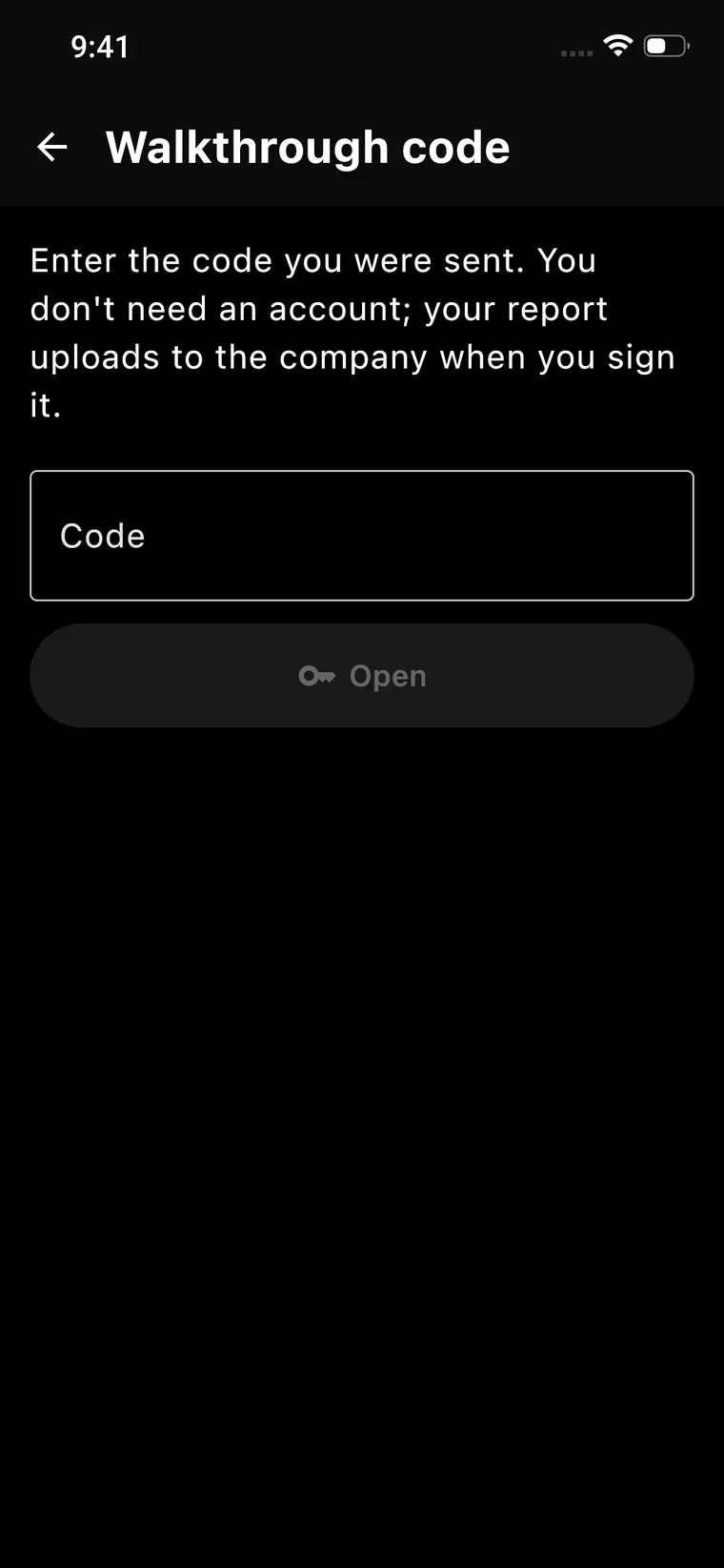
The tenant walks through too — with no account
You text or email a code. They open it, walk their own unit, photograph what they see and sign. No app to install, no password to invent, no sign-up form between them and the thing you need them to do.
Two records of the same room, taken by the two people who disagree about it later, is worth more than one record taken by whoever holds the deposit.
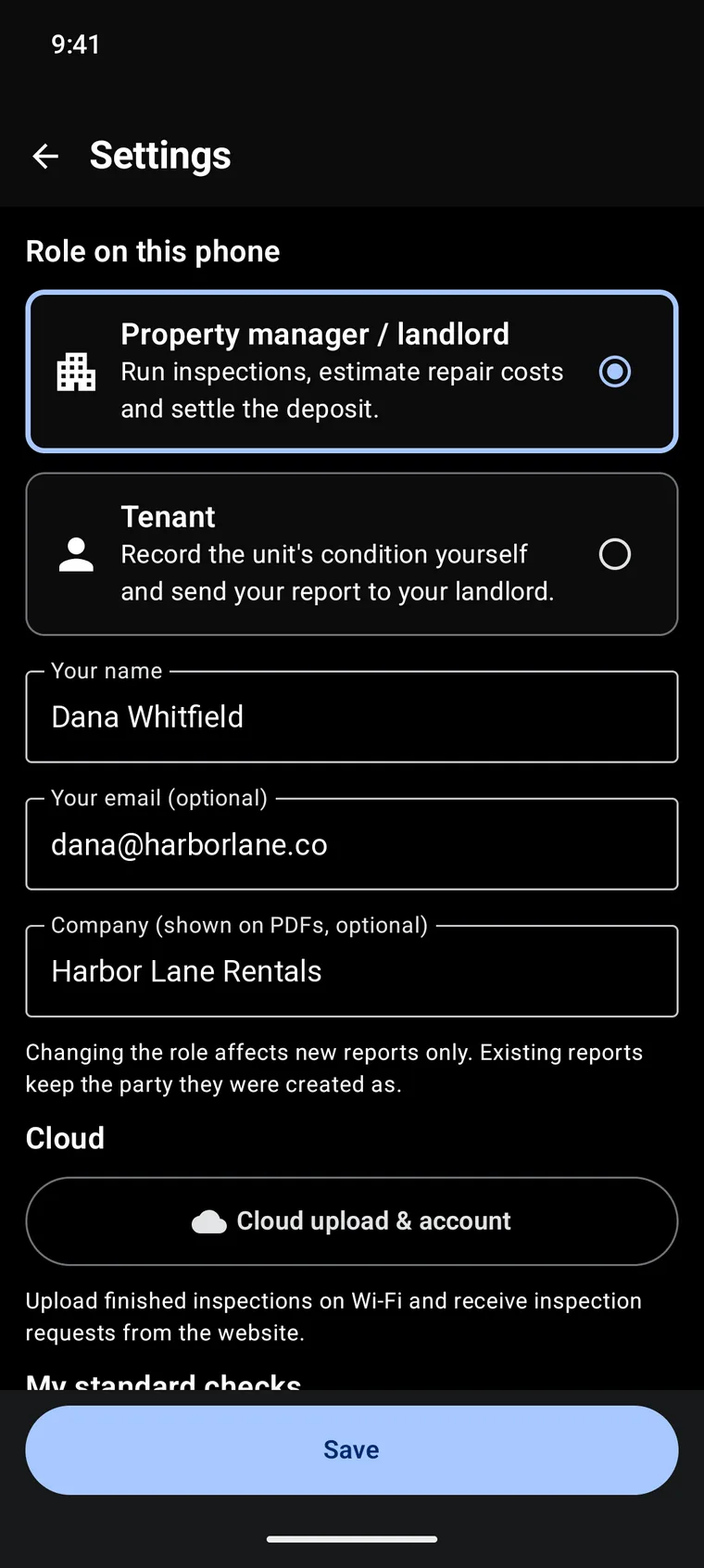
Deductions priced from your own sheet
Keep your repair prices in the app — what you actually pay to patch a wall or replace a blind. A deduction is then a line item with a price you set in advance, not a number invented at the moment it is disputed.
A tenant who can see what the charge is for, and that the figure predates the argument, is a tenant far less likely to take it further.
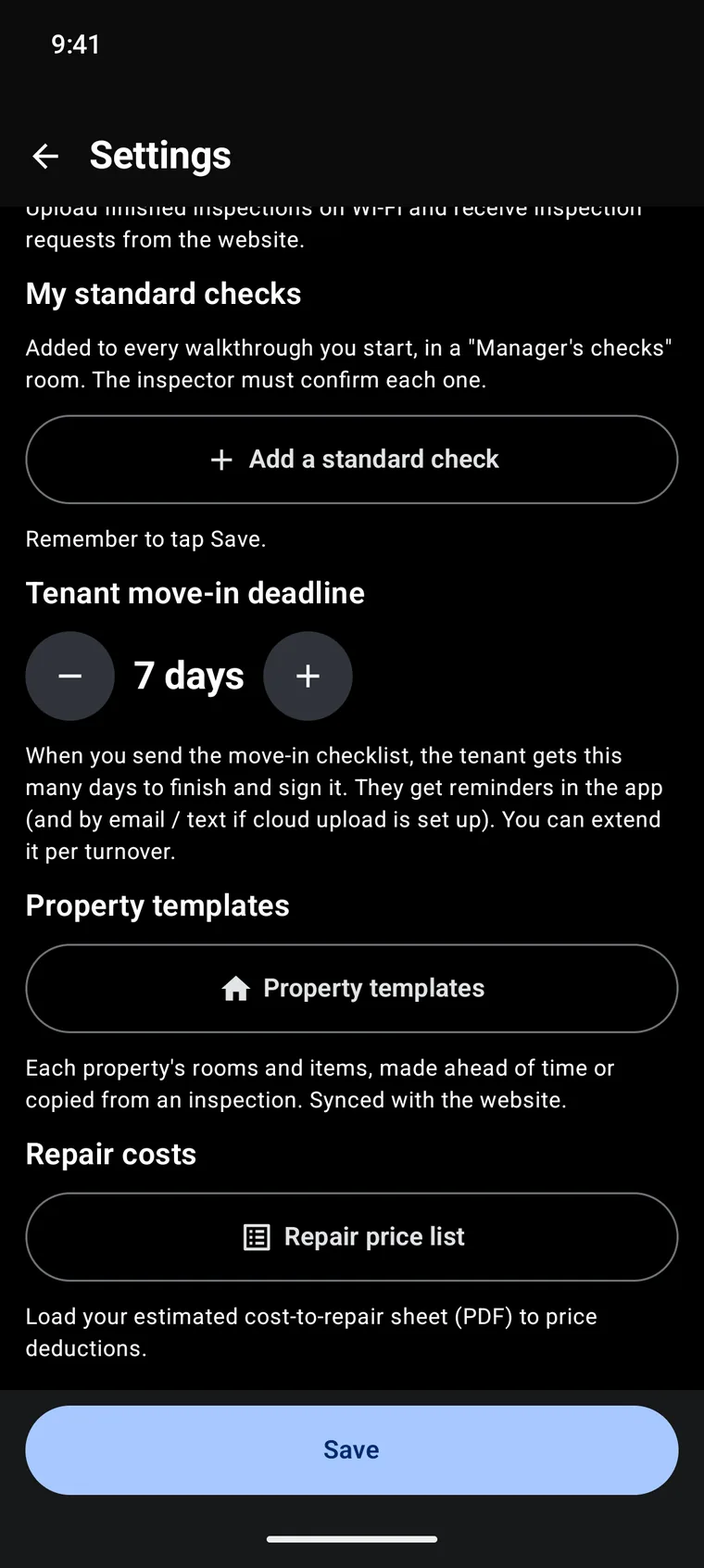
Landlord or tenant, the same app
Set the role on the phone and it changes whose walkthrough you are doing. A tenant records a unit's condition and sends it to their landlord; a manager runs the inspection, prices the repairs and settles the deposit.
Changing the role affects new reports only — past ones keep the party they were made as.
What you get either way
Works offline
The walkthrough happens on the phone. Signal is for afterwards.
Photos and video
Set how many photographs an item needs before it can be passed.
Counts, not just conditions
Keys, remotes, openers — given at move-in, returned at move-out.
Signed PDFs
Every report ends as a document you can send, print or keep.
A cleaning checklist
Sent to whoever cleans, with photographs of the work done.
A deposit statement
Itemised, with a page where the tenant can dispute a line.
Your whole team
Invite staff, hand out walkthroughs, see who has finished what.
It stays yours
Export everything, any time. Cancel and you still get it out.
Pricing
A turnover is one changeover — the move-out and the move-in that follow each other. Prices below are per month; the first year is at the introductory rate.
Free
- 2 turnovers a year
- One person
- 500 MB of photo storage
- Sends from Smart Turnover
Two turnovers a year — enough for one property, and enough to see whether this suits you.
Starter
- 5 turnovers a month
- One person
- 5 GB of photo & video storage
- Sends from Smart Turnover
- $5 per extra turnover
One person, a handful of units.
Team
- 10 turnovers a month
- 4 people
- 20 GB of photo & video storage
- Your own number & email address
- $3.50 per extra turnover
A small office where more than one person does walkthroughs — and the first plan that sends under your own number and address.
Pro
- 30 turnovers a month
- 10 people
- 100 GB of photo & video storage
- Your own number & email address
- $2 per extra turnover
A full portfolio, with the API if you want to wire it into something else.
Business
- 100 turnovers a month
- Unlimited people
- 500 GB of photo & video storage
- Your own number & email address
- $1.50 per extra turnover
Unlimited staff and the volume to match.
Yearly billing takes 10% off. Plans, limits and the exact figures are on your billing page once you have an account.
Walk one unit through it
Two turnovers a year, free, is enough to take a unit out and the next tenant in — the whole loop. If it does not earn its place by the end of that, nothing has been spent.
Start free